Maximizing Caregiver Efficiency & Resident Monitoring in Senior Living: A Strategic Guide for Executives
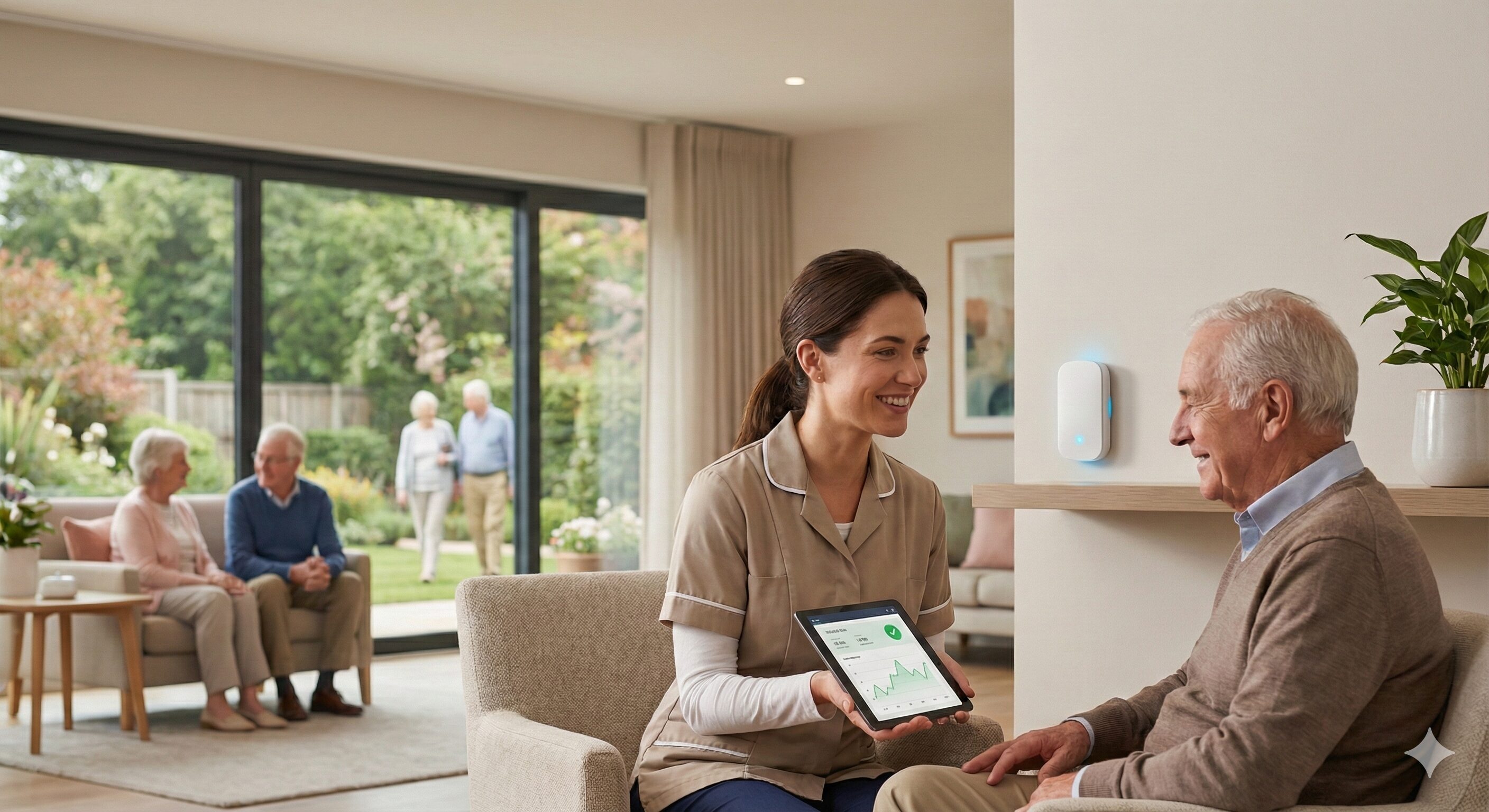
In the current senior living landscape, executive directors and facility owners are caught in a pincer movement. On one side, the “Silver Tsunami” is driving record demand for assisted living and memory care. On the other, a chronic labor shortage and rising operational costs are squeezing margins tighter than ever.
The solution to this paradox isn’t simply “hiring more people”—it is the optimization of the people you already have. By prioritizing caregiver efficiency & resident monitoring in senior living, forward-thinking operators are transforming their communities from reactive environments into proactive, data-driven centers of excellence.
Here is how modern resident monitoring technology is redefining caregiver workflows and why it is the most critical investment for 2024 and beyond.
The Shift from Reactive to Proactive Care
Traditional senior living care models are inherently reactive. A resident falls, they press a pendant (if they are able), and a caregiver responds. Or, a caregiver performs a manual “room check” every two hours, often waking a sleeping resident and missing incidents that occur between rounds.
This manual approach is the enemy of efficiency. When you integrate advanced resident monitoring solutions, you move to exception-based care.
Instead of walking hallways to see who might need help, your team is alerted precisely when a resident’s behavior deviates from their “normal” baseline. This allows staff to focus their energy where it is needed most, reducing “alarm fatigue” and ensuring that no resident is left waiting.
Solving the Staffing Crisis Through Technology
Staffing remains the #1 challenge for senior living executives. High turnover is often driven by burnout and the feeling of being overwhelmed by “invisible” tasks.
How monitoring improves caregiver efficiency:
- Reduced Manual Rounds: Automated, passive monitoring eliminates the need for intrusive physical checks, saving staff hours per shift.
- Streamlined Communication: Integrated platforms ensure the right alert reaches the right caregiver instantly, reducing the “he-said-she-said” in shift handovers.
- Focus on High-Value Care: When technology handles the “eyes and ears” of the facility, caregivers can spend more time on the “heart” of the job—meaningful human connection and clinical support.
By making the job more manageable, you don’t just improve efficiency; you improve caregiver retention, saving your facility thousands in recruitment and training costs.
Enhancing Safety Without Sacrificing Dignity
For executives, liability and resident safety are top of mind. However, today’s residents and their families are increasingly resistant to “institutional” feeling environments. They don’t want cameras, and they often forget to wear pendants.
The new gold standard in resident monitoring is passive sensing. Using AI and ambient sensors, systems can detect:
- Fall Risk Indicators: Changes in gait or increased nighttime restlessness.
- Early Illness Detection: Frequent bathroom trips that may signal a UTI or changes in sleep patterns that precede a health decline.
- Rapid Response: Detecting a fall, even if the resident is unconscious or unable to call for help.
This “safety net” operates in the background, providing total peace of mind for families while allowing residents to maintain their privacy and independence.
The ROI of Integrated Monitoring Systems
From a budgetary perspective, the case for caregiver efficiency & resident monitoring in senior living is rooted in Net Operating Income (NOI).
- Increased Length of Stay (LOS): By detecting health issues early, you can intervene before a resident requires a transfer to a higher-acuity nursing home. Keeping a resident for just three extra months significantly boosts the lifetime value of that contract.
- Competitive Advantage: Families are tech-savvy. When they tour a facility and see data-backed wellness reports and proactive safety measures, your community stands out against “old-school” competitors.
- Lower Liability Premiums: Many insurance providers view facilities that use automated monitoring to mitigate fall risks and improve response times favorably.
Leading the Digital Transformation
The transition to a high-efficiency, monitored environment is no longer a “future” goal—it is a current necessity. For executives, the data provided by these systems offers a “birds-eye view” of facility health, enabling better-informed decisions on staffing levels, care plans, and resource allocation.
At Amba, we specialize in helping senior living operators bridge the gap between technology and human-centric care. Our solutions are designed to empower your staff, protect your residents, and future-proof your business.
Ready to Optimize Your Community?
Don’t let staffing challenges dictate your quality of care. Explore how Amba’s suite of tools can revolutionize your operations.
